Laminate Floor Questions – Prep Work and a Piano
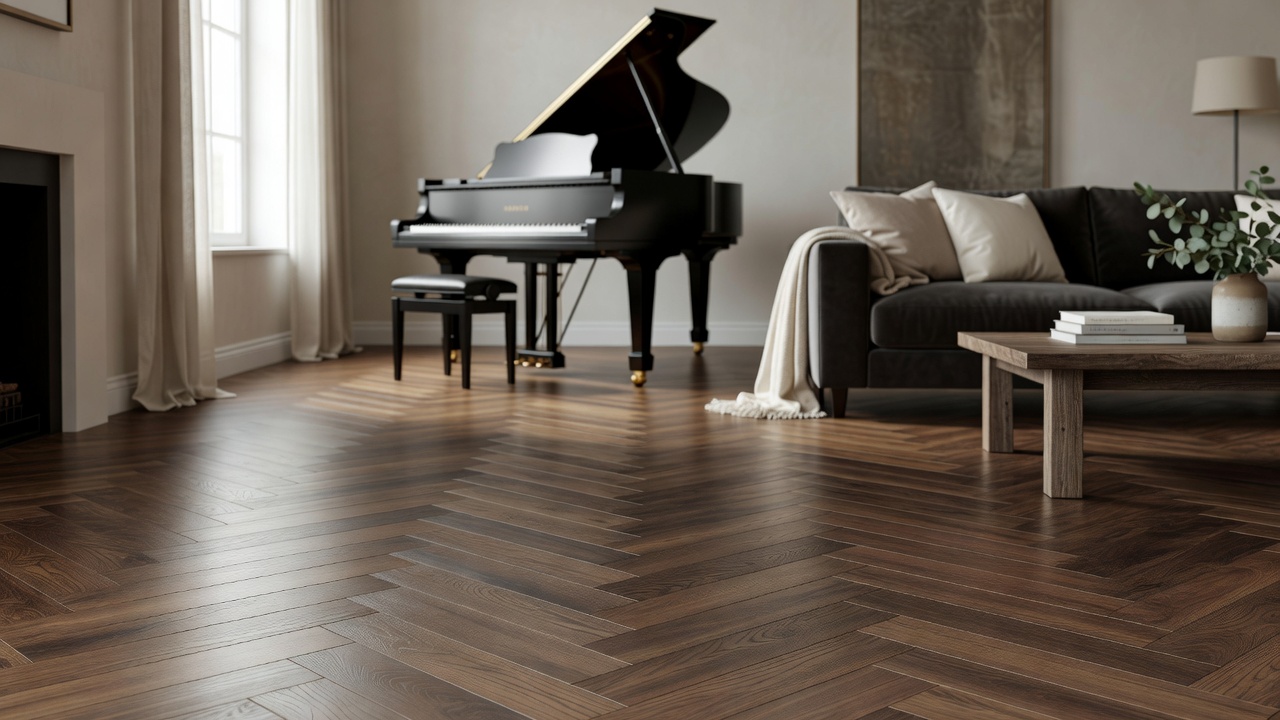
Q: I’m looking at using some of the floating laminate products and wondered if the 30 yr old vinyl should be removed? It’s got some cuts and scrapes, and only in the areas around a few of the cabinet edges are there any slight tears/buckling; in fairly good shape for 30 years i suppose…very grimy though! We are not sure about how to prep floors
I recently read a few things about heavy objects on this type flooring. We have a piano that sits on one edge of our dining room wall; is this going to be an issue when we put the flooring in with buckling, etc…? (Right now we are just on bare painted concrete)??
Thanks for any info,
S. Schwarzenbach
A: Two very important questions when looking into a floating floor, let’s first dig in to prep for your floor.
Depending on the condition of the vinyl will matter if it must be removed or not. In your case, since there is some cracking and perhaps a spot or two where it is coming up, I would suggest pulling the vinyl up. Although it has stood the test of time rather well, 30 years is quite the war record, I would still remove it to ensure that no future problem telegraph through and mess with your new laminate floor.
Most installers will suggest with any floor that you should install directly over the subfloor, with no flooring between. This is definitely advisable, and a good general rule as it can help you to identify problems in the subfloor and fix them before they become problems down the road. Make sure that your subfloor is level before installing, this could mean doing a bit of leveling work to flatten it out, but it is well worth it in the long run. As a guess, if there are so few issues with your Vinyl, your subfloor should be in pretty good shape as well.
Now let’s move onto your concerns with the piano. It is a good rule to avoid putting any heavy furniture over a floating floor at the edge of the floor. In some cases heavy furniture will work well toward the center of a floating floor, assuming you use a good underlayment, but going toward the edge of the floor is asking for disaster.
I have seen floating cork floors which served well in game rooms with a pool table in the center – so yes, you can have heavy stuff on a floating floor, but as I said, it needs to be toward the middle and the key to success is the underlayment. The secret here is density, very dense underlayment, typically cork, helps to ensure that the floor can better support the weight of heavier furniture and thus, will work under something like a pool table or grand piano.
If the piano you have is better suited against the wall, then I would suggest using either a small section of tile in the room, or build a small platform of the laminate that is not connect to the rest of the floor, so that it coordinates, but will not cause potential buckling.