Common Misconception: Thicker Hardwood Flooring is Better
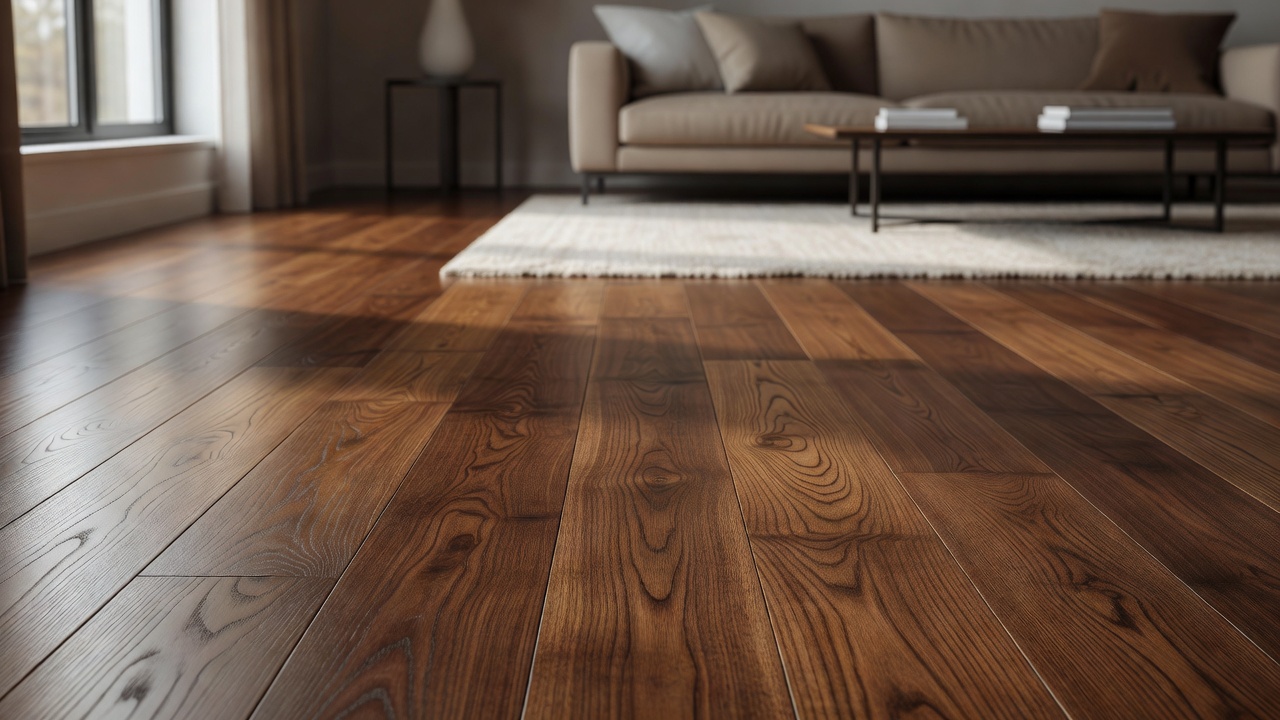
For our editorial this month, I would like to go into depth about a very common misconception when it comes to shopping for flooring. Before we get rolling, I’d like to give some Kudos to Bryan over on our Marketing team for the idea on this article. Bryan mentioned that a friend of his whom recently purchased flooring mentioned “we prefer to buy quality wood floor, you know, the thick stuff.” This led to a short conversation between Bryan and I, which has led to April’s flooring lesson.
The concept that a thicker floor is a better floor is very common and a majority of the time is very wrong. The basic thought process, which I used to have before getting into the flooring industry, is that a thicker floor means there is more wood, so it must be stronger and higher quality. Let’s dig into why this thought is wrong and what thickness actually means for a floor.
Hardwood:
Durability is usually what thicker floors are attributed to having, but a 3/4″ solid red oak floor can have the same durability as a 5/16″ solid red oak floor. When it comes hardwood floors, durability comes from two very important factors: finish and species.
Dent Resistance
The species of wood the flooring is made from is critical in getting an idea for the dent resistance a floor will have. Each species of wood has a measure hardness rating which stems from the Janka Hardness test (also called Janka rating). The Janka test determines the pounds of pressure required to push a steel ball into the wood so that half of the ball’s diameter is buried in the wood. Red Oak, which is a standard in flooring has a Janka rating of 1360, anything under this rating is typically considered a “soft” wood. Regardless of how thick the wood is, it will still have the same hardness and therefore the same dent resistance.
Abrasion Resistance
Finish also plays a major roll in a floor’s durability, most importantly abrasion resistance. Seeing a scratch in a brand new floor can be a real pain and depending on the finish used on your floor, you will be able to gauge just how resistant your floor is to abrasion. In the flooring industry there are many types of finish and a myriad of different formulas for each type, so without going to in depth and boring you with details about each formula and why its so great, let’s cover the basics. Multiple thin coats of finish will be much better than few thick coats. Certain finishes are far stronger than others. One of the toughest parts of finish in the flooring industry is aluminum oxide. Aluminum oxide is one of the hardest compounds on earth and many urethane finishes have aluminum oxide added to prevent abrasion. The higher the aluminum oxide content, the more of a matte or low gloss appearance you will have. Acrylic finishes are also very tough and along side the aluminum oxide finishes they provide the best abrasion resistance on average.
The other portion of this misconception is that a thicker floors means it is higher quality. The quality of a floor comes down to a few key factors: milling, wood grade, and finish.
Wood grade is the first major factor as this will determine how the flooring looks, how sound it is, and how it will begin the process before being milled and finished. Wood flooring has many grades from very uniform, high grade looks to more rustic or character grades. Here is a basic overview of the grades, but keep in mind there are a few degrees left out as it becomes a matter of smaller details. Clear grade flooring is the top tier typically found in flooring. Clear grade is very uniform in wood grain and coloring and is typically free of the character parts of wood such as knots and mineral streaks. Select or Select and Better is a very good grade of flooring and is more common in most domestic species of wood (such as oak or maple). These grades have a bit more grain variation and some color variation, but is still typically free of most knots and other characters of wood floors. The next tier down would be common grades (typically #1 and #2). These are grades of wood with much more character such as sound knots, mineral streaks, shade and grain variation and the occasional worm hole. These grades are great for getting a bit more visual appeal in your floor and a less uniform appearance. Many times floors which are referred to as rustic grade are made from common grades of wood. The final tier would be cabin or tavern grade flooring. This grade will have tons of character, including worm holes, unsound knots (typically ones which are removed or filled with putty), strong mineral streaking and various other character marks.
The milling is very key here as this will determine how well the flooring as a finished product is. Including in milling is the process of selecting planks, checking for errors and the level of engineering involved in making the wood. Some manufacturers have very high-tech facilities to mill their products, which results in very low rates of defect and easier installation. Greater milling also ensure more uniformity in the product being built.
The final portion here is the finish. High quality floors have very good finishes applied to them, as this not only increases durability, but also can give the floor certain desired appearances which usually are matters of gloss level.
The only scenario in which thicker is better becomes truthful is the wear layer of a flooring when discussing refinishing. Thicker wear layers allow for more potential refinishes should they be necessary.
Engineered Wood Floors
Engineered floors also defy this conception as they are typically much thinner, but due to the technology involved in making them, they are far more stable and resilient than solid wood floors. Engineered floors have a wear layer made from the species of wood desired and are laminated to a cross-ply substrate made of a less expensive wood (typically poplar) which helps to reduce expansion and contraction as well as increase dent resistance some as the cross plies help to absorb shock. There are also various other benefits to engineered floors, but they fall in line with my previous mentions where matters of milling and finish determine quality.
History
3/4″ solid wood flooring has been around since it was hand-sawn and sculpted since the 1300s. This tradition has been kept on mostly for sake of tradition and because it has been a standard for so long.
The change to this traditional aspect of flooring came in Versailles, France in 1684 when parquet flooring was introduced. Parquet, a wood working mosaic, was cut thinner than the 3/4″ standard in order to produce it more effectively.
Since then advancements in milling technology have allowed for various thicknesses of flooring to be produced, including the more recent use of 5/16″ solid hardwood flooring which was brought about in the 1970s in part to work with homes which were typically built with vinyl and carpet. This allowed wood flooring to be easily installed without a need to raise cabinetry and trims while still getting the wood floor look of home made in the 30s and 40s. With this change in thickness, planks were made in short widths to make the product more dimensionally stable and as an unintended, but rather nice product of these changes it made 5/16″ solid flooring suitable for glue down applications over concrete which 3/4″ solid can not do.
Summary
As you can see, thicker is better is a misconception which is for the most part incorrect when talking about flooring. Durability and Quality of flooring is not determined by the thickness of the floor, but rather by the species and grade of wood, milling and finish. Advances in technology and engineering have also led to many changes in how we determine quality in flooring.