Hollow Spots in a Bellefloor Maple Floor
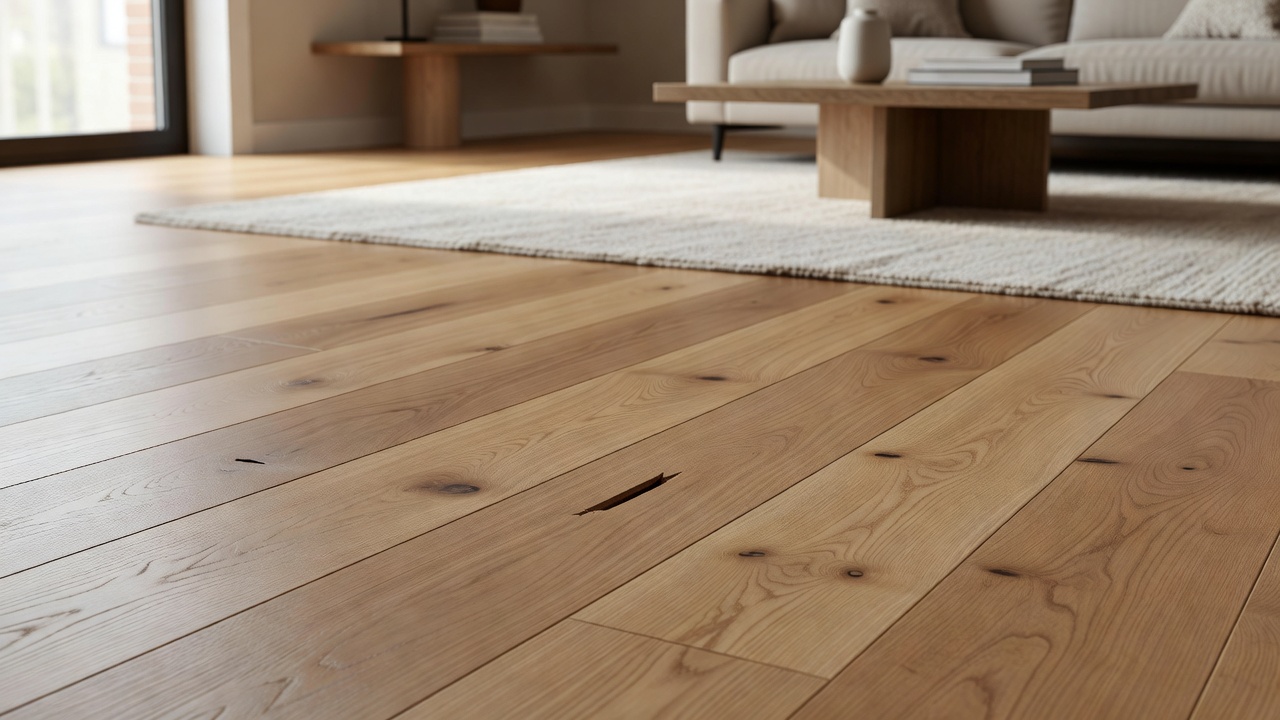
Q: I just got 1100 sf of Bellefloor hard maple installed over concrete sub-floor. I had the installer put MVP sealer just to be on safe side. After the installation, I have about 15 hollow spots of varying sizes. Couple of them even squeak, I used an experienced and highly recommended installer.
What can I do now to fix this problem. The installer wants to drill the holes and force adhesive through it.
Please help.
bx
A: Based on your description it sounds like the subfloor was uneven and not leveled before installation began. My guess here is that the installer thought the underlayment used would account for the variances in the subfloor (assuming this is a floating install) and this was not the case. The best thing to do here would not be to force adhesive into the floor, but rather to pull the floor up, even out the subfloor using a self leveling compound or some grinding and then reinstalling the floor back over the newly leveled concrete.
Forcing adhesive into the floor could cause all sorts of problems. If the adhesive is not evenly applied over a smooth and flat floor evenly, slight flexes in the floor in areas without adhesive could begin to buckle or warp when the areas with adhesive do not move as the rest of the floor moves. Also, if the adhesive is injected in and cures with the floor over the top it could very well put excessive moisture into the floor as it cures and warp portions of the wood.
Normally with adhesives and wood flooring you can NOT do the wet-lay method. Typically the adhesive must cure to a tacky consistency before flooring is laid into it. Otherwise vapor from the curing adhesive will be absorbed by the wood and can cause warping.
Again, the best thing here would be to remove the floor, level out the concrete, then reinstall the concrete. Do NOT inject adhesive in specific areas as this could be devastating to your floor if this was floating.
Now, in the case where this floor was glued down, a different scenario is occurring. Now if this was done as a glue down what you are encountering is air pockets and drilling then injecting adhesive is fairly common. What your installer will need to ensure to do is to put down some wax paper or resin paper after plugging the drill hole and applying some weight to the injected area to ensure it removes the air pocket properly and adheres to the flooring.
This should remove your noise and make sure the floor serves you for many years. If you choose to not have this done, it is very likely the lack of bond in this area will slowly begin to travel up the floor and you will encounter boards coming loose and eventually popping up.
End result: If this was glued down, your installer is suggesting the proper course of action to fix it. If this floor was floating, then injecting adhesive into certain areas would be very bad for the floor.