What Floor is Best for My Project?
Flooring – I NEED HELP! – Follow Up Part 2
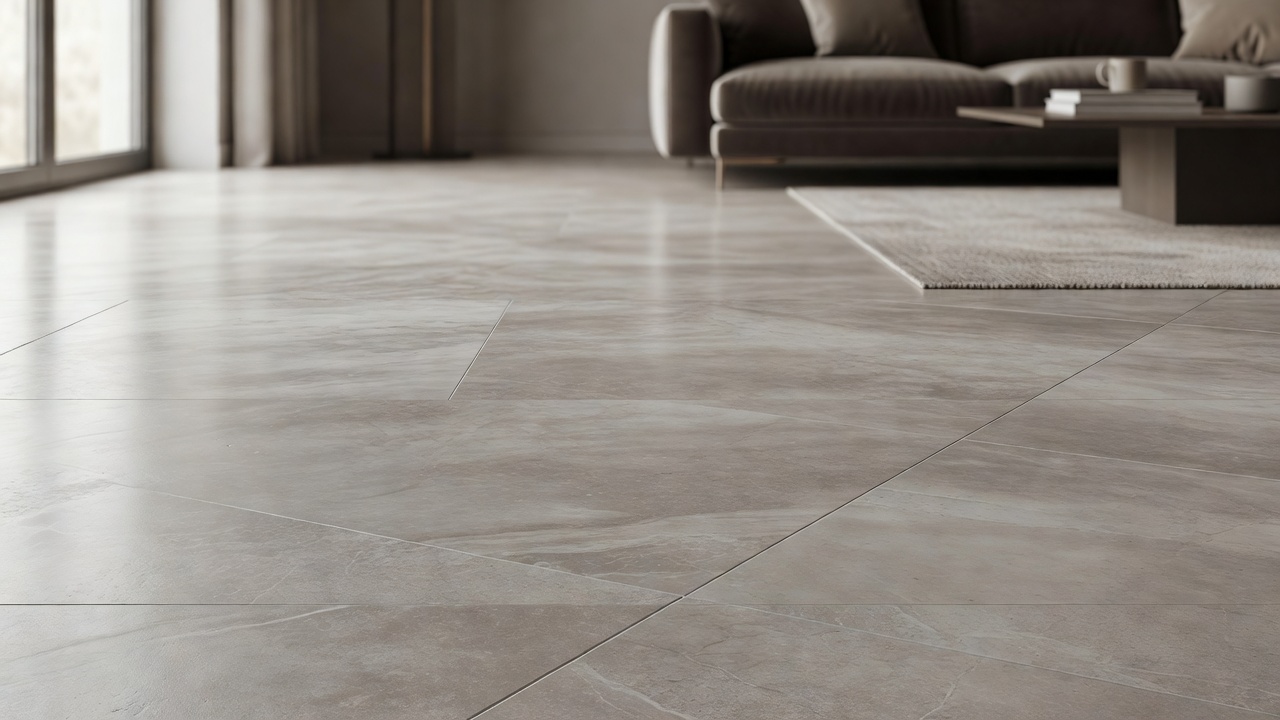
Let’s get back on board with Jackie and get to some of her questions concerning tile flooring and solutions to some of her dilemmas:
Q: I am requesting further input to help me pick the best flooring to fit my needs. I am willing to accept some trade-offs.
The options that I am currently considering, based on what I’ve learned, are as follows:
——————————————————————————————————————————————-
_*OPTION 1:*_
TWO different types of flooring on main floor.
Ceramic (see below) and engineered wood, cork, bamboo in LR/DR. Cork would be warmer/softer
Two different options within this option…
a) Ceramic tile in entrance, hallway, kitchen, laundry
Disadvantages:
-cold in winter (could use throw rugs and slippers…)
Advantages:
-cooler in summer = refreshing as I have no basement and use fans to cool me off…
– better for high traffic/elements (dog, some dirt/snow), can go right through condo without taking shoes off in good weather etc.
b) What if I put ceramic in front entrance and down the hall, /through the kitchen /and out the back door but used a second flooring like cork to the left of the tile in the kitchen and to the right of it, in the LR/DR and laundry area?.
Question 1: Would this look too silly??
Question 2: I’ve read that ceramic over cement is not good (shifting/cracking). True??
Question 3: Home Depot flooring guy said I could use some special caulking/slightly stretchy that would expand between the tiles and therefore compensate for shifting and minimize cracking. True?? And, if so, is it made of unhealthy off-gasing ingredients??
Question 4: How does one move heavy furniture on engineered floor. I have used those “miracle movers” on carpet but I’m sure it would scratch any other floor and/or tear cork.
I don’t mean when you are ‘Moving In’ moving but when you want to clean behind the stove, washer, dryer, fridge…Would a dolly be necessary? I know all about putting the soft felt pads under all of the furniture for daily protection.
Here are a few pictures Jackie sent in to help see her condo:
A: The dilemma of having multiple types of flooring is not as bad as you may think, it is just a matter of planning and making smart choices for your flooring which looks good to you. No matter how much I or any other flooring guy tells you that floor X is the best floor ever, if you hate how it looks, it should never be in your home. When it comes to the questions of “will this look good?” (I get these fairly often) its not a matter of what I think can help to guide you, but if it looks great to you, then it is great. Now, let’s get down to your questions and a bit of planning.
You have laid out several options as far as flooring choices so what I am going to suggest and work with is what will meet your needs the best – putting the durable, moisture resistant flooring in proper areas and using solutions which coordinate and remain warm throughout the rest of your condo.
Honestly the best bet for durability and not having to worry about moisture is going to be tile or stone in the kitchen, laundry room and near the entrances for your doors. You could even use a stone or tile to cover the entire first floor of your condo so that you have a nice uniform appearance across the entire floor, but with some careful planning you can mix stone/tile and cork very effectively. Certain corks, such as the Faro, have a look that resembles stone more than other corks and mixes quite well with similar colored stone and tile.
(In this picture here you can see the back entrance Jackie mentioned, with the kitchen to the left and the laundry room to the right of the open door)
Let’s discuss a bit about tile or stone flooring. Your concern about installing tile over cement (same would go for natural stone flooring) with cracking and what the Home Depot folks told you is correct. There is a worry of cracking, but let me explain why this occurs before we get into solutions of how to prevent it. When a stone surface is installed over concrete, the thinset will hold the tile/stone in place, but as the concrete subfloor itself slowly shifts and moves from season to season, this movement will telegraph through the thinset and the tile. Due to how tile is installed, it is not meant to account for this movement, so much like a miniature earthquake if you will, the movement from the subfloor moves through the tile and since the tile itself can not move in turn, cracking occurs. The caulking that was suggested to you sounds more like a quick fix, which might minimize cracking, but I doubt it would remove it. The right way to do this would be to use an uncoupling membrane.
Schluter makes a great product called Ditra and I’ll quote precisely from Schluter about what an uncoupling membrane does:
“Tile has been successfully installed for thousands of years by incorporating an uncoupling layer, or forgiving shear interface, within the tile assembly. Schluter-DITRA provides uncoupling through its open rib structure, which allows for in-plane movement that effectively neutralizes the differential movement stresses between the substrate and the tile, thus eliminating the major cause of cracking and delaminating of the tiled surface.”
Roughly put, the uncoupling layer works to remove the stresses of movement between the two stone based surfaces, thus preventing cracking, think of it like shock absorbers in your car. The benefit of tile or stone is that it is far more durable than wood flooring and its essentially impervious to moisture problems. Basically put, tile is the best solution for the laundry room and kitchen area toward the back of your condo, floored rather similarly to how it appears in the photo you sent.
To address your concern about tile being cold, there is a relatively easy solution that will keep the tile warm: electric radiant heat systems. There are several electric radiant heat systems built for tile, usually in a pad or cord format. Off hand one of the bigger names out there is Nuheat, which is an excellent coil system that is able to work under tile. These systems will keep the tile warm, but generally speaking are not to be used as a primary heating source for your home like the built in water tube style systems. The question you may have is how do you install both the uncoupling layer and the heating system. Pretty simple, each system will have specifications as to which is to be set first (uncoupling or heating) and simply follow the instructions and you will have a durable, moisture proof, warm floor. The other benefit here is that well chosen tile or stone (stone more likely here) that is installed well with an uncoupling membrane and heating system can add a great value to your condo.