Laminate vs Hardwood
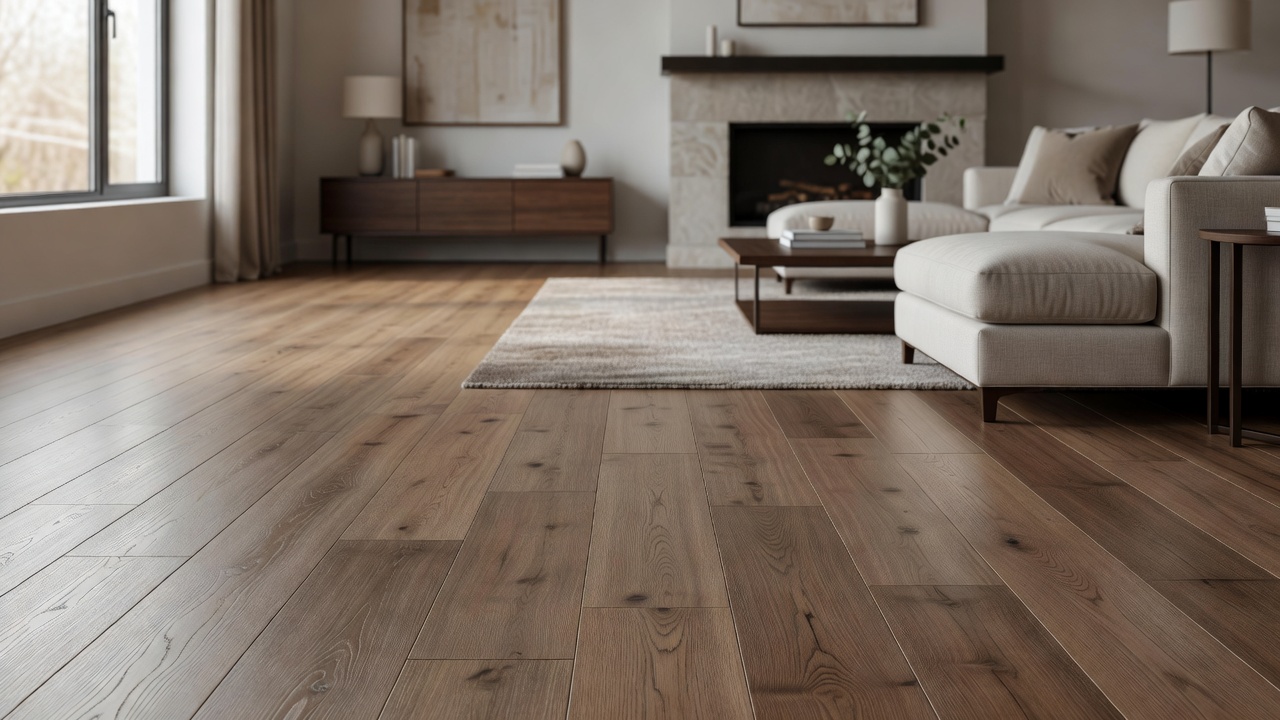
I got this question from a comment on our video How to Install Westhollow Laminate Flooring on YouTube. Check it out if you get a chance as its a great guide for installing any laminate.
Q: What is the difference with laminate and wood?
Thanks
A: We’ll first assume that by wood we are talking about traditional hardwood flooring. The major difference is that hardwood is made from sawn planks of timber whereas laminate is a picture of wood laminated through heat and pressure to adhere it to a core board and backing. Basically put laminate is an engineered product constructed using a medium or high-density fiberboard (a wood product) which is then laminated together with a backing board and a surface layer which is composed of an image (photograph of a wood pattern) and an extremely tough-wearing aluminum oxide. Hardwood flooring is made from sawn timber which is then milled and finished to create plank of finished wood flooring. The major difference is that hardwood is made from sawn planks of timber whereas laminate is a picture of wood laminated through heat and pressure to adhere it to a core board and backing.
Here’s a great overview of what Laminate is from Steve’s article Laminate Basics:
Though laminate flooring was introduced in the United States in 1996, it has been sold successfully in Europe for about 20 years.
Most people have never heard of laminate flooring and have no idea what it is. But chances are, those same people know what Pergo flooring is. Well, Pergo is laminate flooring. They were the company that first created this type of flooring, and was the first brand of laminate offered in the United States. For this reason, its name has become synonymous with laminate flooring despite the presence of about 40 other brands.
Essentially all laminates are composed of three layers.
The Surface Wear Layer
The surface layer is typically made of an extremely tough-wearing aluminum oxide. The pattern that you see as you look at the floor is actually that of a printed photograph adhered to the clear surface. Many people consider the pattern an additional layer, but for simplification, we consider them as one. Many laminates look like wood floors, but it’s merely a photograph of a wood floor applied to a melamine laminate. Because you can photograph nearly anything for a floor, there are few limitations. Most, though, are wood-, stone-, brick- and tile-based.
The Core
The core board or “carrier board” is made up of a variety of materials, depending on the manufacturer. Most manufactuers use HDF, or high density fiberboard, which is a durable engineered wood product that resists moisture. Others can have a high-density wood particle core. While the HDF may be slightly more structurally sound, the particle core absorbs glue slightly better at the joints. Both materials, if manufactured by dependable companies, provide a durable, trustworthy core.
Backing
The backing board varies depending on who makes the floor, but it ranges from a paper layer to a full plastic laminate layer. Those with a laminate or melamine backing may be better against potential water damage than those with paper backings, and the laminate is more stable.
All of these layers are fused by heat and pressure either by direct-pressure or high-pressure construction. A direct-pressure laminate (DPL) is assembled at once, then heated and pressed to form a bond. High-pressure laminate (HPL), on the other hand, involves treating the top and bottom layers separately and then fusing them to the core layer under extreme pressure. HPL is a more recent innovation and is often found in the more expensive premium brands