Bookcases on Wood Floors
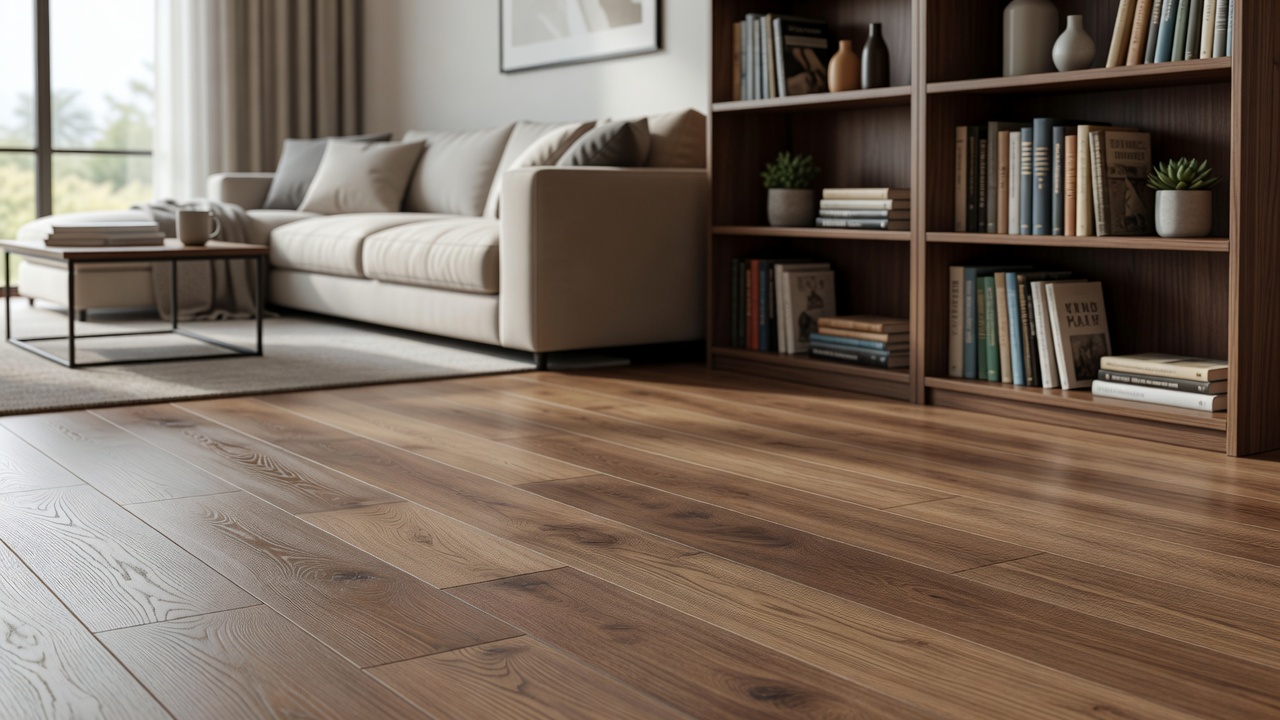
Q: After the laminate flooring is installed, I plan to move the large (8′ tall) bookcases that are currently in a small hard-wood-floored bedroom to the newly floored room. These bookcases will line at least one wall, possibly two facing walls, and then be filled with books. I decided to go with laminate flooring because I was concerned that they would not be particularly stable on the current floor covering (carpeting). They are now and will be pretty heavy. Is there a problem with that, particularly since that will keep the laminate from using its “breathing space” near the wall? Is there anything special I should do?
Thanks,
Melinda
A: With such large bookcases, I would suggest putting the book cases in place before installing your new laminate. With how floating floors work, putting such heavy objects on one side of the floor near a wall will tilt the floor a bit and is bad for the stability of the floor. In the case of pianos, they don’t line an entire wall so you can make that work, but with 8′ tall book cases across an entire wall I would heavily suggest installing the floor after putting in the book cases.
Follow-up Q: I’m glad I asked! I haven’t removed the carpet yet, and thus am not sure of the look of the underfloor. But when we move out some day, we’ll take the bookcases with us. The resulting holes along the edge of the walls will not be pretty. But, assuming we do put the bookcases in over the subfloor, then put in the laminate flooring up to the bookcases (with expansion room), would we be looking at some transition element, like a baby threshold, alongside the bookcases?
Alternatively, would it be reasonable to put in flooring to the edges of the room, but with one or more T-joints (either one down the center of the room, or one on either side, just inside the room from the bookcases)? The flooring under the bookcases would be trapped, but the rest of the floor would not be held hostage.
But maybe laminate flooring is not the solution. Do you have any other recommendations? I can use a saw, hammer, level, straightedge, and lever, and didn’t figure laminate flooring required gobs of strength, just patience.
A: If you have a wood subfloor, I would look into a floor you can nail down (3/4″ solid being your best bet). Solid floors that are directly anchored to a floor will have no issue with your book cases. The other major benefit to a solid hardwood is it adds great value to your home. Laminate will add some value, but in the end it is laminate. (The good ones are durable as all get out though!) You can also look at an engineered hardwood floor, but make sure to use a harder wood with minimum hardness of white oak. (Avoid American Cherry, Black walnut and similar soft woods as they will dent under the book cases). Westhollow and Woodstock make some excellent solid and engineered hardwood floors (for this project I would suggest a pre-finished floor as the finish for these two companies is rather tough).
When it comes to transitions if you use a floating floor I would suggest using end caps/square nose. These will give the floor a smooth looking end to the floor and can go up against the book cases.
In regards to the platform-like approach for your book cases. You could build an area of flooring just for the cases, then put in t-molds to cover the gap between that and the remainder of the floor, but honestly I would look into a nail-down application for this project, as floating floors aren’t designed to handle large furniture as effectively.